Anterior cruciate ligament tear in Hamburg Anterior cruciate ligament tear – causes, symptoms, diagnosis & treatment

What is an anterior cruciate ligament tear?

Two central stabilizers run through the knee: the anterior cruciate ligament (ACL) and the posterior cruciate ligament (PCL). They connect the thigh bone (femur) and the shinbone (tibia) and prevent uncontrolled forward or backward sliding of the tibia. They stabilize the knee in translation (anterior/posterior movement), rotation, and support control during flexion and extension movements.

A cruciate ligament tear involves a partial or complete rupture of one of these ligaments. In most cases, the anterior cruciate ligament is affected. Cruciate ligament tears occur particularly in sports involving rapid changes of direction, stop-and-go movements, or jumping—such as soccer, handball, basketball, tennis, skiing, or gymnastics.

At our sports orthopaedic private practice at LANS Medicum Hamburg, we offer precise diagnostics and individualized treatment strategies—both in conservative therapy and in rehabilitation following cruciate ligament surgery.

How does a cruciate ligament tear occur?

A cruciate ligament tear usually occurs due to a sudden twist, hyperextension, or a direct blow to the knee. Typical triggering mechanisms include:

  • abrupt change of direction with a planted foot (e.g., in soccer or tennis)
  • improper landing after a jump (e.g., in basketball or gymnastics)
  • hyperextension (e.g., in skiing)
  • direct impact to the bent knee (e.g., in handball or traffic accidents)

Risk groups: Athletes in sports involving rapid changes of direction (soccer, handball), jumping (basketball, volleyball), direct contact (martial arts), or rotational stress (alpine skiing) are at higher risk.

Women have a significantly higher risk of ACL ruptures—due in part to hormonal, anatomical, and neuromuscular factors.

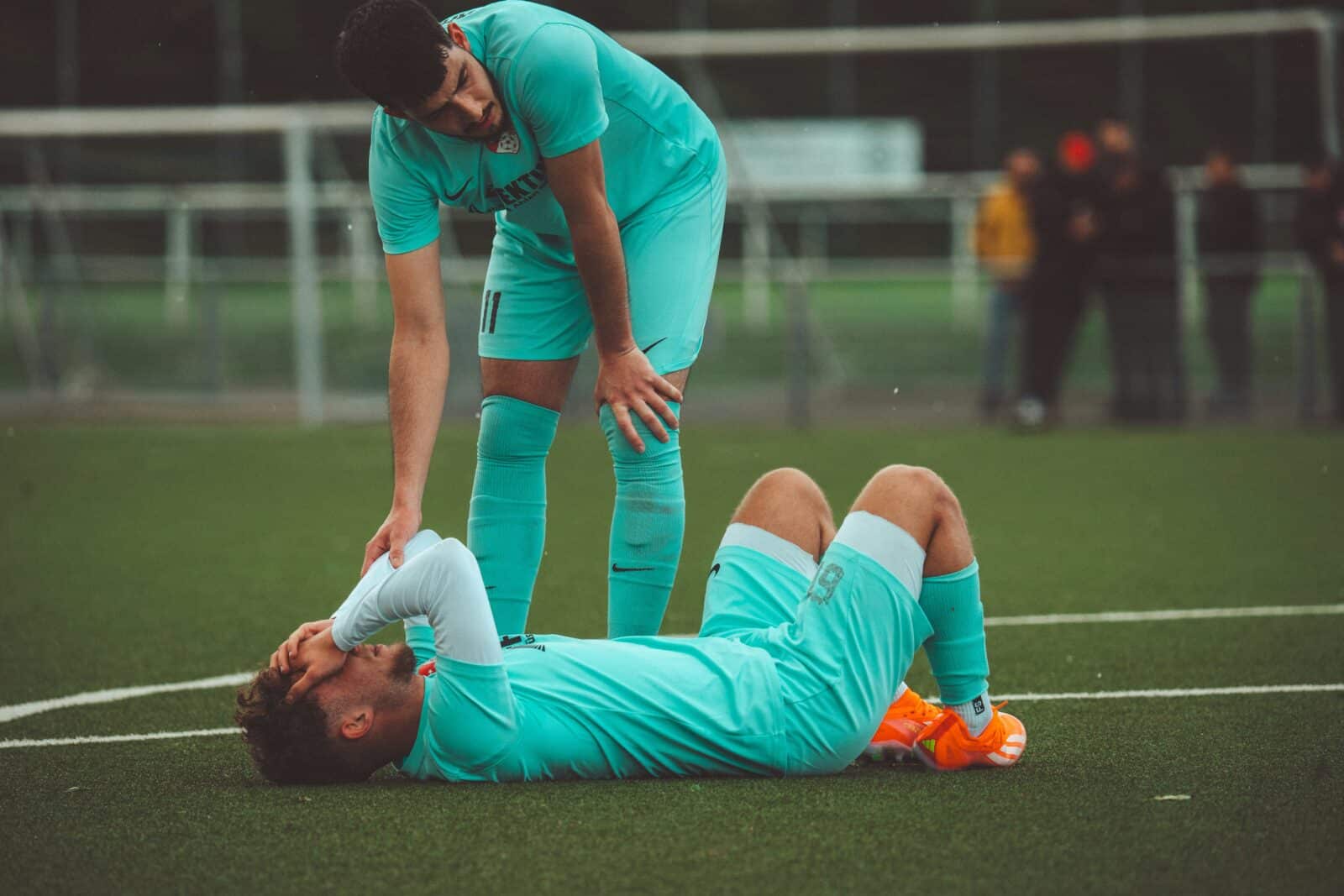
Verletzung mit Kreuzbandriss

How common are cruciate ligament tears?

In Germany, approximately 30,000 cruciate ligament surgeries are performed each year. In sports that place high stress on the knee joint, anterior cruciate ligament tears are among the most common reasons for an extended break from sports. Extrapolated to a population of 100,000 people, the incidence is around 35–40 ACL ruptures per year. In countries with well-documented injury statistics, such as Sweden or Norway, registry studies have reported an incidence of up to 78 per 100,000 inhabitants—with an increasing trend in recent years, particularly among younger adults. In the 15–25 age group, the incidence is even as high as 100 per 100,000 inhabitants.

Symptoms – how to recognize a cruciate ligament tear

Many people describe the moment of injury as suddenly twisting the knee while playing soccer, hearing a loud “pop,” followed by rapid swelling.

Typical symptoms include:

  • sudden, sharp knee pain
  • audible “pop”
  • rapid swelling (within hours)
  • feeling of instability when walking (“giving way”)
  • restricted range of motion

Differential diagnoses for suspected cruciate ligament tear

A cruciate ligament tear can easily be confused with other knee injuries in the acute phase, as many symptoms—such as pain, swelling, or a feeling of instability—are nonspecific. Possible differential diagnoses include:

  • Meniscus tear: Especially during twisting movements under load, a meniscus injury can cause similar pain and a “locking” sensation in the joint.
  • Medial or lateral collateral ligament rupture: Pain and instability usually occur on the sides of the knee, often after varus or valgus stress.
  • Patellar dislocation: The kneecap slips out of its groove, often with visibly noticeable misalignment and pain at the front of the knee.
  • Bone bruise or edema: Following a fall or impact, sometimes with significant swelling, but without mechanical instability.
  • Sprain or partial cruciate ligament tear: Can present similarly to a complete tear but is functionally much more stable.

Accurate clinical examination and imaging diagnostics (e.g., MRI) are essential to reliably differentiate these conditions.

What should I do in the event of a cruciate ligament tear?

If you suspect a cruciate ligament injury—such as after hearing a “pop,” experiencing sudden pain, swelling, or instability in the knee—you should act immediately to prevent further damage.

The RICE principle (rest, ice, compression, elevation) is a proven first step:

  • Rest: Stop any activity immediately.
  • Ice: Apply cold to the knee. This mainly helps with pain relief.
  • Compression: An elastic bandage can help reduce swelling.
  • Elevation: Raise the leg to improve blood and fluid return.

Avoid unnecessary strain—even if walking initially seems possible. Self-tests for instability are not recommended.

See an orthopedic or sports medicine specialist promptly—ideally one experienced in acute management of cruciate ligament injuries. At our LANS Medicum Hamburg practice, we offer rapid diagnostics and individualized advice on next steps, backed by years of experience supporting multiple sports teams.

We provide prompt appointments for specialist evaluation in Hamburg — the earlier the diagnosis, the better the prognosis.

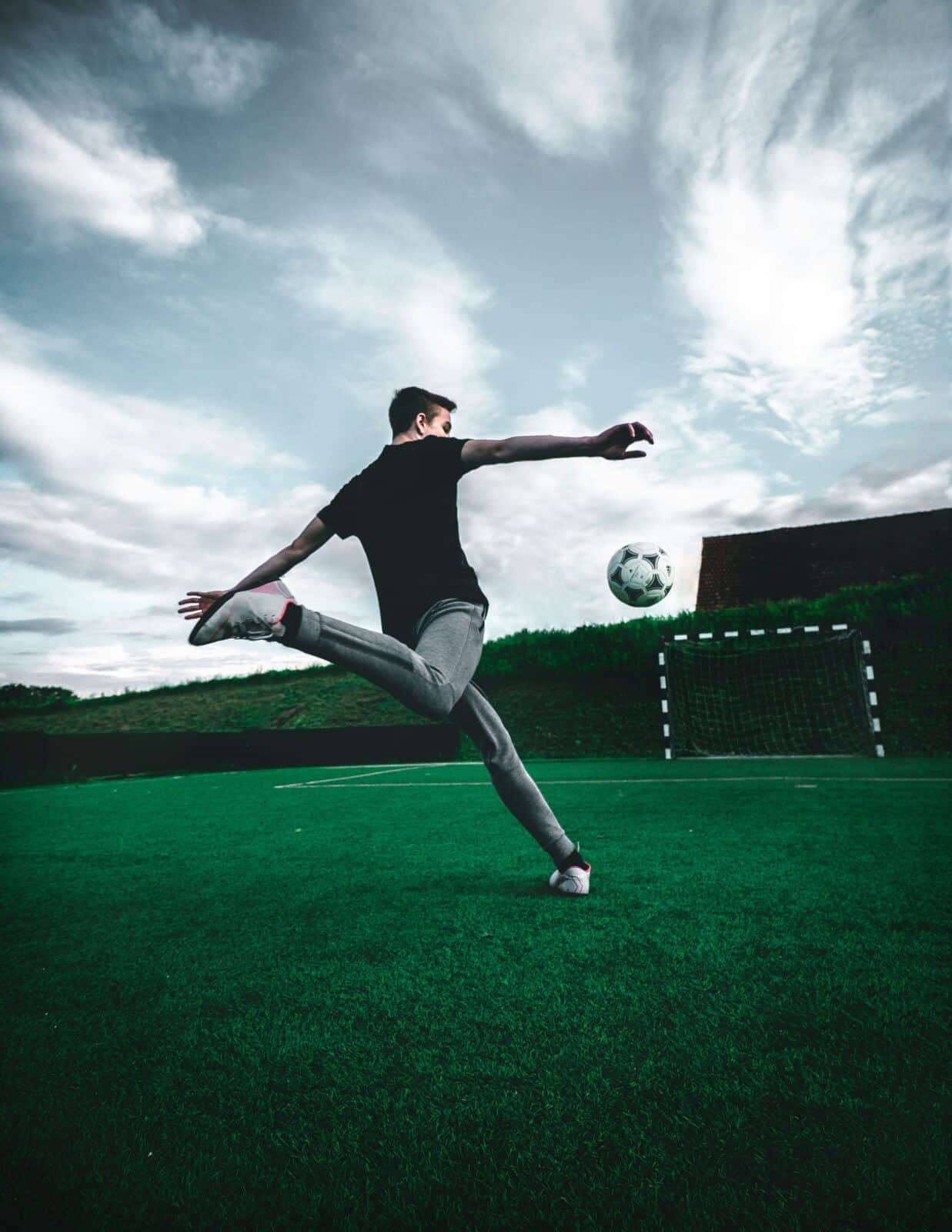
Verletzung beim Fußball

How is a cruciate ligament tear diagnosed?

The diagnosis of a cruciate ligament tear is based on a combination of several complementary examination methods. The goal is to reliably identify the injury, detect accompanying injuries, and enable an informed treatment decision:

  • Clinical function tests: These include the Lachman test, Pivot-Shift test, and the anterior/posterior drawer test. They assess the passive stability of the knee and indicate whether the anterior or posterior cruciate ligament is injured. The Lachman test, in particular, is considered the most sensitive test for acute ACL rupture.
  • Ultrasound diagnostics: Ultrasound can detect joint effusions, soft tissue injuries, and indirect signs of a cruciate ligament tear in the acute phase—such as anterior tibial shift. It is radiation-free, quickly available, and provides initial insights, but it does not replace MRI.
  • Magnetic resonance imaging (MRI): MRI is the gold standard for imaging-confirmed cruciate ligament tears. It allows assessment of the ligament itself and reveals associated injuries such as meniscus tears, bone edema, or cartilage damage—crucial for treatment planning.
  • Instrumented measurements: Devices like the KT-1000 or Lachmeter quantify the anterior or posterior translation of the tibia under defined force. This objective measurement of joint laxity is particularly useful for monitoring progression, evaluating conservative therapy, or assessing postoperative function.

In our practice, we use a structured, multi-step diagnostic approach that combines clinical expertise with modern imaging and functional tests. Our orthopedic and sports medicine specialists have years of experience in diagnosing complex knee injuries—whether in acute sports injuries or chronic instability—ensuring a well-founded and transparent treatment recommendation.

What treatment options are available?

The decision for or against surgery depends on several factors. In many cases, conservative therapy can be just as successful as a surgical procedure.

Studies such as the KANON study show that even physically active patients can achieve good results with conservative therapy—provided regular monitoring and functional stability are ensured.

The choice of the appropriate treatment also depends on factors such as age, athletic demands, and any accompanying injuries.

In our treatment concept, we use a comprehensive assessment followed by an individualized training program over 6–8 weeks to determine whether surgery is still necessary. The decision is based on both subjective and objective stability and function after this phase.

How long does it take to recover from a cruciate ligament tear?

The duration of rehabilitation after a cruciate ligament tear varies individually, but we can provide a general guideline:

Initially, a multimodal therapy over 6–8 weeks is recommended, followed by testing of the knee joint. Daily activities without crutches are usually possible after 4–8 weeks. The further timeline depends on the type of treatment performed.

With continued conservative therapy:

  • Jogging: after 3–4 months
  • Contact sports: after 6 months (if stable)

After anterior cruciate ligament surgery:

  • Daily activities: after 2–4 weeks (possibly with a brace)
  • Jogging: after 3–4 months
  • Sport-specific training: after 6 months
  • Return to sport: after 9–12 months (after testing)

The exact timing for returning to sports without restrictions is determined based on your progress in rehabilitation. Once certain milestones are reached, we conduct our cruciate ligament test, which allows a well-founded decision on return to sport.

During rehabilitation, we also perform sports science assessments at our practice:

  • Maximum strength testing
  • EMG analysis
  • Jump tests

The goal is not only to return to sport but to ensure safe and sustainable joint stability and load capacity.

Foto von Sven Kucinic auf Unsplash

Anterior vs. Posterior Cruciate Ligament Tear

The anterior cruciate ligament (ACL) tears much more frequently—usually due to twisting movements with a planted foot. The posterior cruciate ligament (PCL) is often injured by direct trauma (e.g., “dashboard injury”).

Differences in treatment:

  • ACL: Surgical reconstruction is often recommended for physically active patients. As mentioned earlier, this is an individual decision depending on factors such as age, athletic demands, and accompanying injuries.
  • PCL: Conservative therapy is frequently successful. Surgery is only necessary in cases of significant instability or unsuccessful conservative treatment.

Rehabilitation duration and load progression:

  • ACL: Standardized rehab protocols with return to sport after 9–12 months
  • PCL: Slower load progression, longer restrictions on knee extension

We discuss the best option with you individually—tailored to your daily activities, athletic demands, and personal goals.

Treatment of Cruciate Ligament Tears in Hamburg – Your Specialists at LANS Medicum

Our private practice at LANS Medicum Hamburg specializes in the diagnosis and treatment of cruciate ligament injuries—both conservative and post-surgical.

Whether you are a professional athlete or a recreational sports enthusiast, we take the time to understand your situation and work with you to develop a structured treatment plan.

Schedule an appointment now

Schedule an appointment now at our Sports Orthopedics in Hamburg

Get personal advice from our team and benefit from treatment at the highest level.

Schedule an appointment by phone at +49 40 94849930 or book an appointment online.

Do you have any questions? Feel free to send us an email.